
As businesses accelerate their digital transformation, cloud infrastructure has become the backbone of modern IT environments. Organizations are moving beyond traditional data centers and adopting advanced cloud strategies to improve scalability, security, and operational efficiency.
Two major approaches dominating enterprise IT today are Hybrid Cloud and Multi-Cloud. While both provide flexibility and performance benefits, choosing the right strategy can significantly impact business operations.
For companies operating in fast-growing business hubs like Mumbai, selecting the right cloud model is essential to maintain competitiveness and ensure uninterrupted digital services.
Understanding Hybrid Cloud Infrastructure
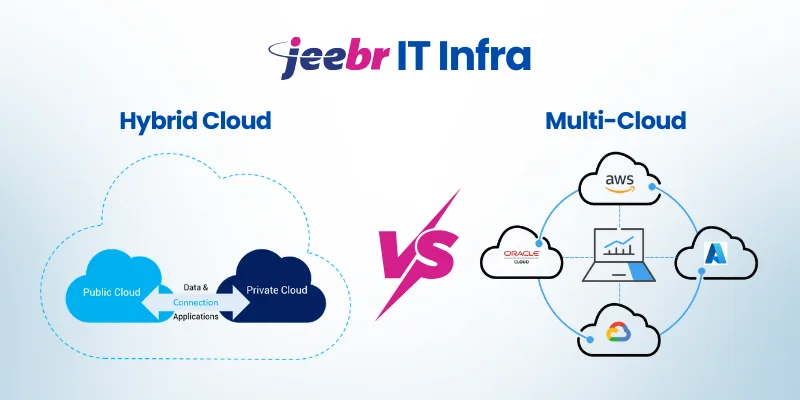
A hybrid cloud combines on-premise infrastructure with public or private cloud environments. This allows businesses to keep sensitive data in local systems while using cloud platforms for scalability and flexibility.
This model is especially useful for enterprises that require strict compliance, security, and data control.
Key Benefits of Hybrid Cloud
Greater Control Over Data
Critical workloads remain within internal infrastructure, ensuring security and regulatory compliance.
Scalability On Demand
Cloud resources can be expanded quickly without investing in additional physical infrastructure.
Cost Optimization
Businesses pay only for the cloud resources they use while maintaining essential systems locally.
Improved Disaster Recovery
Hybrid setups allow organizations to store backups and run recovery environments in the cloud.
Understanding Multi-Cloud Infrastructure
Multi-cloud refers to using multiple cloud service providers simultaneously, such as AWS, Azure, and Google Cloud. Instead of relying on a single provider, organizations distribute workloads across multiple platforms.
This strategy helps businesses avoid vendor lock-in while improving reliability and redundancy.
Key Benefits of Multi-Cloud
Reduced Dependency on One Provider
Companies can shift workloads between providers if issues arise.
Better Performance Optimization
Applications can run on the cloud platform that offers the best performance for specific workloads.
Enhanced Business Continuity
If one cloud provider experiences downtime, services can continue through another platform.
Flexibility for Innovation
Different providers offer specialized services such as AI tools, analytics platforms, and advanced computing.
Hybrid Cloud vs Multi-Cloud: Key Differences
| Factor | Hybrid Cloud | Multi-Cloud |
| Infrastructure | Combines on-premise + cloud | Uses multiple cloud providers |
| Data Control | Higher control for sensitive data | Distributed across providers |
| Complexity | Moderate | Higher management complexity |
| Vendor Dependency | Partial | Reduced vendor lock-in |
| Ideal For | Regulated industries | Large scalable enterprises |
Which Model is Best for Mumbai Enterprises?
For many businesses in Mumbai, the best solution often combines both hybrid and multi-cloud strategies.
Industries such as:
- Banking & financial services
- Healthcare
- IT & SaaS companies
- Manufacturing
- E-commerce
require infrastructure that balances security, performance, and scalability.
A well-designed cloud architecture ensures organizations can operate efficiently while protecting sensitive data and maintaining compliance.
How Modern IT Infrastructure Supports Cloud Strategies
Successful cloud implementation requires a strong IT foundation, including:
- Secure network infrastructure
- High-speed enterprise connectivity
- Advanced cybersecurity frameworks
- Data backup and disaster recovery
- 24×7 monitoring and management
With the right IT partner, businesses can integrate cloud technologies seamlessly into their operations.
Conclusion
Cloud computing is no longer just an IT trend — it is a critical business strategy. Whether enterprises adopt Hybrid Cloud, Multi-Cloud, or a combination of both, the goal remains the same: improve efficiency, strengthen security, and enable long-term growth.
Businesses that invest in modern cloud infrastructure today will gain the flexibility and resilience needed to succeed in the digital economy of tomorrow.